domingo, 2 de febrero de 2020

February 3, 2020


______________________________________________________________________________
Kudos
_____________________________________________________________________________________________________
  • Kudos to Brad Ferstenou and Stephanie Rummler for your organization and time to make snow cones happen during the lunch period for our students!  What a great way for students to use their KCBs!!!  
  • Thank you to our teachers for your time and efforts to infuse the Standards Mastery within iReady and the TDAs into our work between now and April!  Such a collaborative group!  
  • Thank you all as well for your patience, time, and strategies for getting the iReady winter diagnostic completed!  With so many students out sick the window has been extended for this entire week to help get students finished!  
Article this week:  This article really speaks to our purpose and goals when it comes to our Essential Skill work.  We are not a standards-based school district as we believe it is important to merge standards together that make sense together in order to really hone in on what is important for all students!  This article speaks to this along with the ever so importance of disciplinary literacy, something I know all of you believe in and infuse everyday!

Radical Reset: The Case for Minimalist Literacy Standards

Mike Schmoker
Pared down standards are the cure to the Common Core.

In profound ways, literacy is destiny. It is the single most important goal of schooling and the key to academic and career success. Adequate levels of literacy would nearly eliminate the achievement gap (Hirsch, 2010); inadequate levels account, more than anything, for high school and college dropout rates as well as, according to some, our perversely high rates of special education placement (Ferrandino & Tirozzi, 2004).

Quantity Counts

It all begins with reading—lots of it. David Liben writes that students must consume "a huge volume and range of texts," including grade-appropriate texts (Pondiscio & Mahnken, 2014). For Kelly Gallagher, struggling readers must "read voraciously" to catch up with their peers (2009). Richard Allington's research likewise demonstrates that students must read "huge amounts" of text to acquire essential vocabulary and become proficient readers (2006).
To that end, Allington recommends two unassailable literacy standards, which could almost suffice on their own: a minimum of 60 minutes of reading and 40 minutes of writing every day, across the curriculum (2011). Large amounts of reading can pay off instantly—even a few weeks of reading-intensive literacy instruction will result in about one full year of academic growth (Haycock, 2005).
And yet students today read, discuss, and write about what they read for an infinitesimal proportion of the school day (Sundeen, 2015). Instead, they engage in dismaying amounts of aimless group activities; of cutting, coloring, pasting; or of completing reams of worksheets. Moreover, the quality and complexity of reading assignments has plummeted by several grade levels in the last 30 years (Paulson, 2014). These may be the two most destructive, underappreciated facts in all of education today.

Essential Literacy Standards

To address these issues, individual schools or districts should develop a viable set of simple, high-leverage standards—which specify, schedule, or enumerate the approximate number, amount, length, and frequency of the following, appropriate to each grade level:
Anchor Texts: The knowledge-rich, grade-appropriate fiction and non-fiction books, articles, textbook selections, poems, plays, and primary resources that all students will read—and analyze, discuss, and write about—in each respective course.
Discussions, Seminars, and Debates: These must be purposeful, grounded in reading, and aligned with simple criteria—for example, speak audibly, clearly, logically, and with civility (see Schmoker, 2018a, pp. 140–141).
Writing Assignments and Papers: To be completed each week, grading period, or year—and predominantly grounded in close, analytic reading. Smart districts build formal, extended capstone writing assignments into the curriculum for certain grade levels (such as 5th, 8th, and 12th) (Schmoker, 2018a). And they employ common rubrics and "exemplars" of effective student writing to maintain quality standards (which include the requirement for proper grammar, punctuation, and sentence structure).

Less Really Is More

Some might ask: Are such minimal standards enough? Recent research and successful schools indicate that they are, that less is more—and that long lists of criteria are actually inimical to high performance.
Marcus Buckingham's research (2005) on organizational management, in particular, demonstrates the power of minimalist performance standards and criteria. If we want people to perform well, concision is king: the fewer the criteria, the easier it is to reinforce, practice, monitor—and thus ensure—that those criteria are fully met. When organizations establish only a tiny set of crystal-clear criteria, both performance—and job satisfaction—skyrocket.
The same goes for schools. There are both historic and contemporary precedents for minimalist literacy standards which would ensure that students read and write in larger—much larger—amounts. As Diane Ravitch (2010) points out, the operative "standards" (her word) embedded in the 1901 college entrance exam required students to read 10 entire substantial books during their senior year (the list was revised annually), and then be ready to write an extended, high-quality essay about any or all of them. The essays were scored with a common scoring guide. Such standards would almost guarantee a transformative shift from worksheets and skill drills to large amounts of analytic reading, writing, and writing instruction.
In a similar way, so would the "Standards for Success" developed by David Conley and his team at the University of Oregon.
In 2005, Conley and his colleagues published a landmark study of college and postsecondary readiness. They found that K–12 schools typically require a highly variant—and grossly inadequate—number of reading and writing assignments. On the basis of their findings, they proposed that schools and districts establish standards for the following, and for every course—in order to guarantee generous amounts of reading and writing:
  • The minimum number of common, core texts to be read.
  • The minimum number of pages students would read.
  • The minimum number—and length—of writing assignments to be written in each course.
In addition, they proposed that departments should implement common scoring guides for the written work.
As we've seen, quantity counts—immensely. Such simple standards, grounded in content knowledge, would redress our decades-long failure to ensure that students engage in large—and life-changing—amounts of authentic literacy activities. Done right, they could transform education in America, as many schools attest.
Our work is the right work!
______________________________________________________________________________
Information/Reminders
__________________________________________________________________________________________________________________________


New Construction Information 
  • Click HERE to access the building blog. It has been updated as of January 30th!
This week:
  • Monday, February 3 - 7th grade to the auditorium during extended advisory!  
    • Please bring them up as soon as you finish announcements and attendance and then stay up stairs with your advisory.  
    • All of the course selection materials are in your mailbox if you have not grabbed them yet!  
    • Please oversee the collection of your advisory student's elective course request sheets and put them back in the envelope as you receive them back from students.  There is also an advisory class list so please check them off as you get them back.  It will help us know who we still need to get course request sheets from as we near the entering them in Skyward time frame!  
    • Forms are due back to you by February 10th!!!  At the end of the day on the 10th or the morning of the 11th, please bring your envelope up to Kris Thomsen!  
  • Monday, February 3 - BLT Meeting in the large conference room from 2:40 - 3:30.  
    • Focus:  Standards Mastery/TDA report out for your team, parent/teacher conferences for February, and standards-based gradebook.  If there is anything you want BLT to talk about tomorrow please add it to the BLT document that is clickable in the Karcher Calendar on February 3.  
  • Monday, February 3 - Freshmen Open House at BHS from 5:30-7:25.  Please encourage our 8th grade students to attend!  Skyward emails have reminded them of the information along with Facebook.  
  • Tuesday, February 4 - Strings Concert in our Karcher gym starting at 6:30!  Come listen to how beautiful our orchestra students are with Dustan Eckmann and Liz Deger!  
  • Wednesday, February 5 - PLC in the library!  
    • You will all have this time to plan for your use of the TDAs and/or Standards Mastery infusion into your classes and/or iTime.  
  • Friday, February 7 - SNOCO Dance for all of our students in our library/Ulab/large conference room from 6:30 - 8:30pm.  
Looking ahead:  

  • Monday, February 10 - 7th grade course selection sheets are due to their advisory teacher!  Then bring them up to Kris.  
  • Monday, February 10 - Focus on parent/teacher conferences for February 25th from 6:00-8:00pm.  This will be where we invite the parents that we would like to talk with as a team or individual teacher.  
Something to know:  
As a district we set up the same type of process we had with Richters but now with Pick n' Save.  Below is the information/steps when using the card!  

We have opened a Pick N Save corporate credit card account.  Each of school will receive a card and each school has an individual card number.

We can begin utilizing it Monday, February 3rd.

  • All purchases require a signature on the receipt kept by the store.
  • Utilizing U-Scan/Self Checkout is not permissible.
  • The staff member using the card will need to notify the cashier, at every transaction, that we are tax exempt. (Even though our tax exempt number is printed on the front of the card.)
  • The staff member who uses the card must return all receipts to Kim when they are returning the card, which should be done as soon as they have completed their purchase.
  • Pick N Save will charge us a $5.00 fee per a receipt copy request, so whomever it is that made the purchase and has lost the receipt, will be held responsible for the $5.00 cost.
    • If this becomes repetitive, the card will no longer be available to that staff member.
______________________________________________________________________________
Pictures from the week
_____________________________________________________________________________________________________

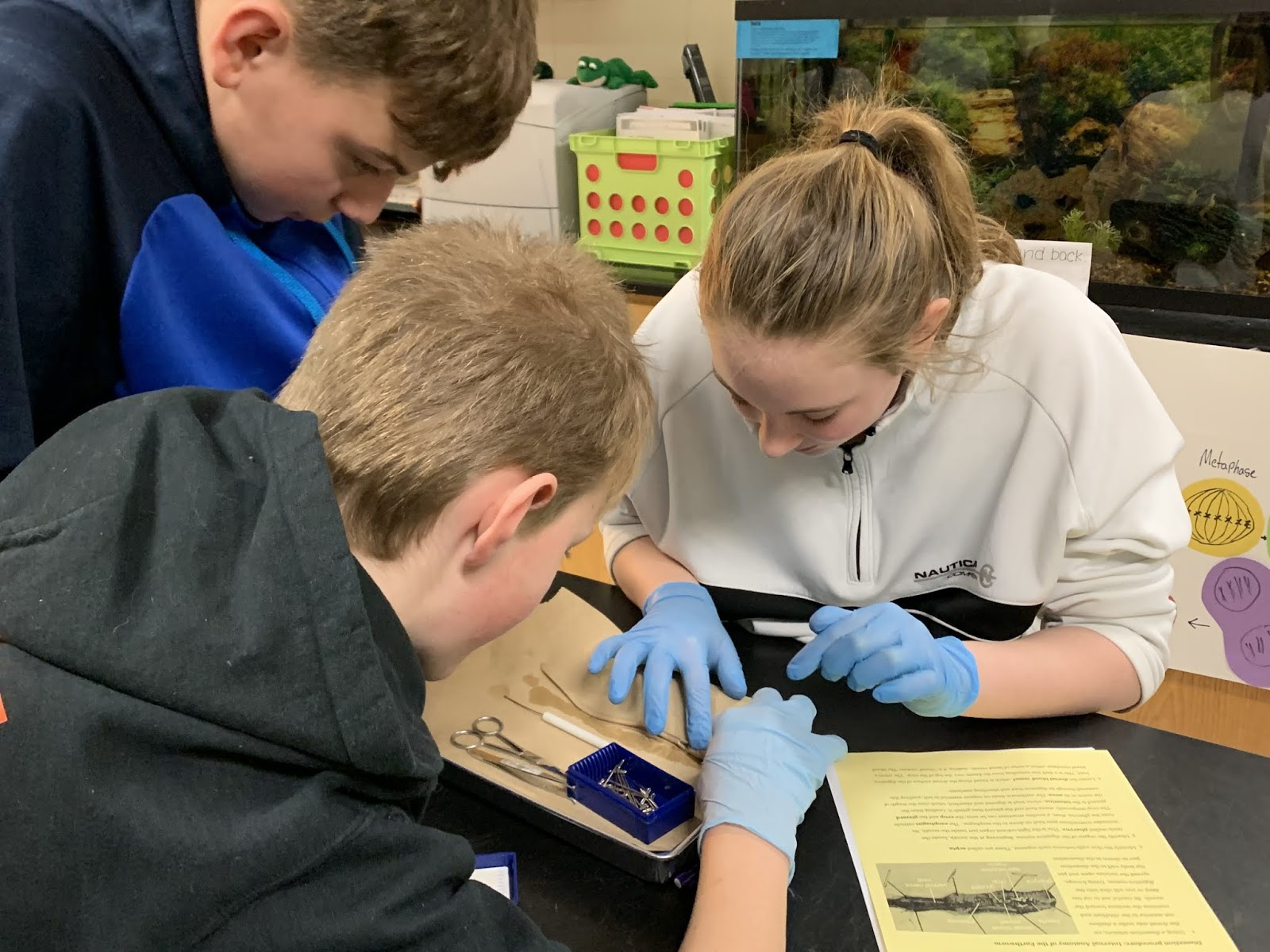
7th grade worm dissection!


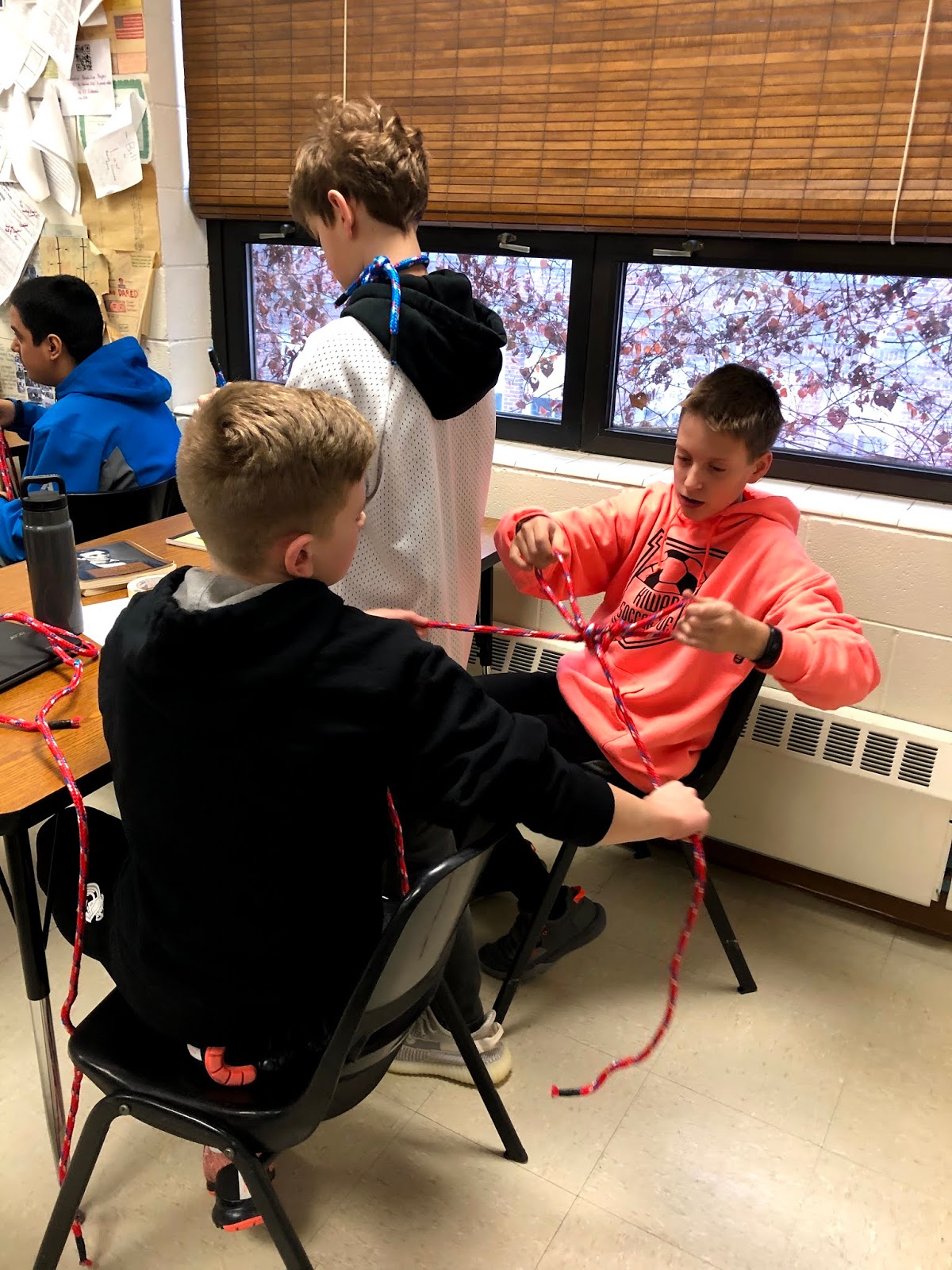
 iTime with Jack Schmidt - students reading informational text and then determining what is important to actually create a rope knot based on their reading!


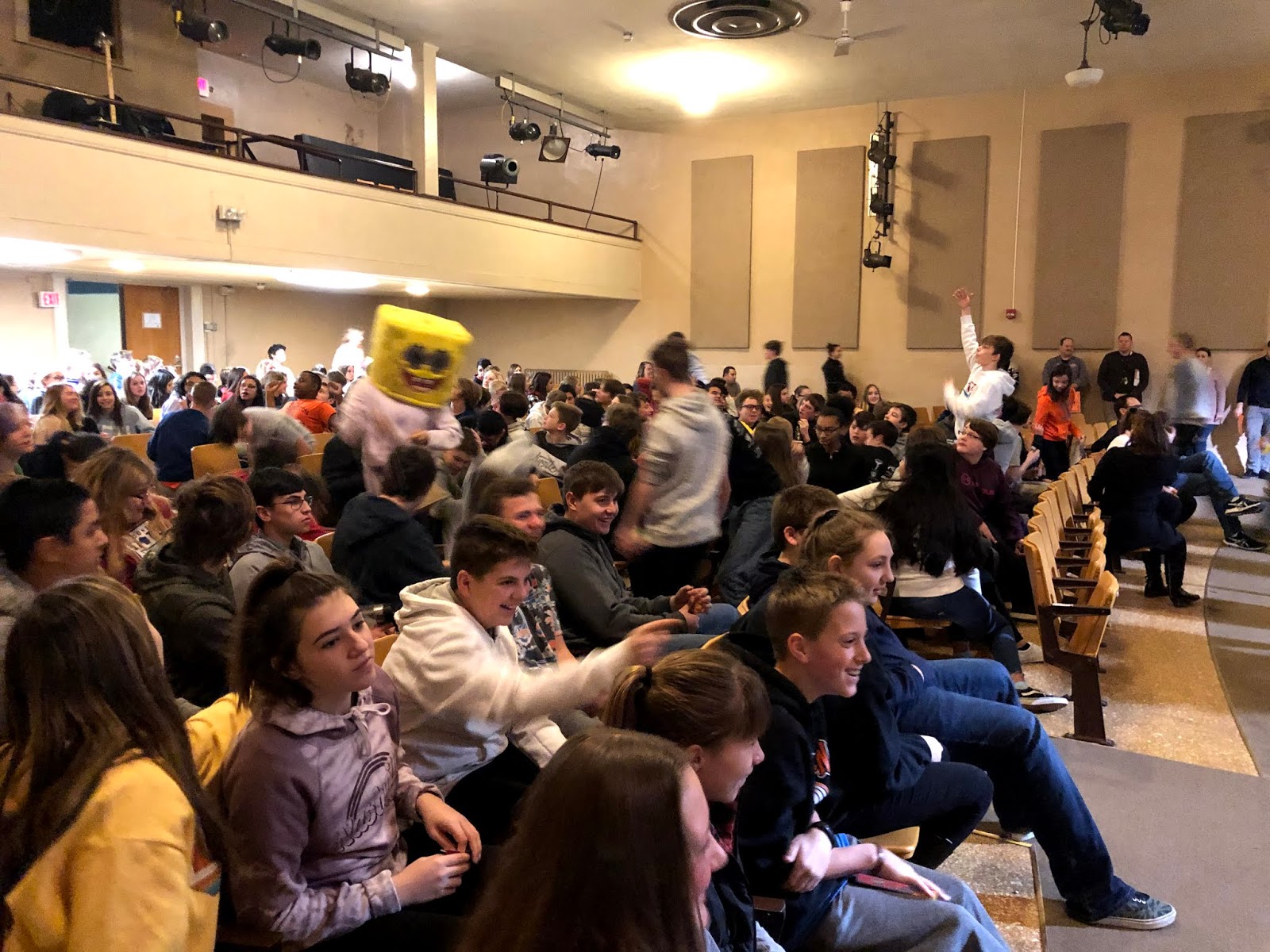
BHS a capella came to Karcher to sing with our choir students!

Snow cones at lunch! 


domingo, 26 de enero de 2020

January 27, 2020

KARCHER STAFF BLOG


______________________________________________________________________________
Kudos
_____________________________________________________________________________________________________
  • Thank you Brad Ferstenou and Stephanie Rummler for all of your behind the scenes work with our Leadership students to make our Karcher Character Assemblies a success!  And thank you to all of the teachers who participated in the Family Feud against the students!  Stellar performance!  
  • Thank you to our ELA staff for creating a great testing environment for our students during their winter iReady diagnostic.  We appreciate that you take this seriously as the data provides us with great insight into our students understanding of the standards.  
  • Thank you to our Scheduling Committee for your work and collaboration on Friday afternoon!  The meeting was scheduled from 11:40-12:30 but staff stayed until 1:30-2:00!  We appreciate your care and concern for ensuring we think of everything when it comes to our schedule.  And, thank you for ensuring Dyer staff feel equally part of the process as well!  
  • Congrats to the following staff members for our dedication and years of service to BASD:  
    • Patti Tenhagen, Kris Thomsen, and Stacey Steeples for 15 years of service 
    • Scott Staude and Rod Stoughton for 20 years of service 
    • Hans Block for 30 years of service (Impressive!!!) 

Article this week:  Continuation from the last 2 weeks

Test Better, Teach Better

by W. James Popham

Chapter 1. The Links Between Testing and Teaching


Using Tests to Determine Students' Entry Status

In most instructional settings, teachers inherit a new crop of students each year, and more often than not, these teachers really don't know what sorts of capabilities the new students bring with them. Likewise, teachers looking ahead in their planning books to new topics or skills (weather systems, Homer's epics, multiplying fractions, group discussion skills, ability to work independently) frequently find they have only the roughest idea, usually based on the previous grade level's content standards, of their students' existing familiarity or interest in the upcoming topics or of their students' expertise in the upcoming skill areas. Knowing where students stand in relation to future content, both as a group and as individuals, is one of a teacher's most valuable tools in planning appropriate and engaging instruction. Therefore, it's an eminently sensible thing for teachers to get a fix on their students' entry status by pre-assessing them, usually using teacher-created tests to find out what sorts of skills, knowledge, or attitudes these students have. The more diagnostic a pretest is, the more illuminating it will be to the teacher.
You can use pretests to isolate the things your new students already know as well as the things you will need to teach them. If you are a middle school English teacher aspiring to have your 8th graders write gripping narrative essays, and you're certain that these 8th graders haven't seriously studied narrative essays during their earlier years in school, you could use a pre-assessment to help you determine whether your students possess important enabling subskills. Can they, for example, write sentences and paragraphs largely free of mechanical errors in spelling, punctuation, and word usage? If their pre-assessment results show that they already possess these enabling subskills, there's no need to re-teach such subskills. If the pre-assessment results show that your students' mastery of the mechanics of writing is modest, then you'll need to devote appropriate time to promoting such subskills before you move on.
This example brings up an important point. If you're using a classroom pretest chiefly to get a picture of what your students already can do regarding a particular content standard, you should always try to employ a pretest that covers the standard's key enabling subskills or bodies of knowledge. For instance, when I taught a speech class in high school, I always had my students deliver a two- to three-minute extemporaneous speech early in the term. I was looking particularly for the fundamentals—posture, eye contact, organization of content, introductions, conclusions, and avoidance time-fillers such as “uh” and “you know”—those things I knew students needed to master before they could work on refining their abilities as first-class public speakers. Those pretests helped me decide where I wanted to aim my early instruction, and it was always at the most serious weaknesses the students displayed during their “mini-orations.”

Using Tests to Determine How Long to Teach Something

One of the classes I taught in my early years on the “grown-up” side of the desk was 10th grade geography. Thanks to a blessed red geography textbook and my ability to read more rapidly than my 10th graders, I survived the experience (barely). I remember that one of my units was three-week focus on map projections and map skills, during which we explored the use of such map-types as Mercator and homolographic projections. Each year that I taught 10th grade geography, my three-week unit on maps was always precisely three weeks in length. I never altered the duration of the unit because, after all, I had originally estimated that it would take 15 days of teaching to stuff the designated content into my students' heads. Yes, I was instructionally naïve. Beginning teachers often are.
What I should have done instead was use some sort of “dipstick” assessment of students' map skills throughout that three-week period to give me a better idea of how long I really needed to keep teaching map skills to my 10th graders. I always gave my students a 30-item map skills exam at the end of the 3 weeks; I could easily have taken that exam and split it up into 15 microquizzes of 1 or 2 items each, and then randomly administered each of those microquizzes to different students at the end of, say, 2 weeks. Students would have needed only two or three minutes to complete their microquizzes.
This approach is a form of what's called item sampling, a manner of testing in which different students are asked to complete different subsamples of items from a test. It works quite well if a teacher is trying to get a fix on the status of an entire class. (Clearly, item sampling wouldn't permit sensible inferences about individual students because different students would be completing different microquizzes.) By reviewing the results of my item-sampled, en route assessment, I could have determined whether, at the end of only two weeks, my students had already learned enough from their meanderings through Mapland. Looking back, I suspect, we continued to mess with Mercators and homolographics well beyond what was necessary.
You can do something similar with your own students to help you decide how long to continue teaching toward a particular content standard. By using an occasional en route test (either item sampling or by giving the same, possibly shortened, test to all of your students), you can tell whether you need to keep banging away on a topic or can put your drumsticks away.
This kind of instructionally illuminating testing, sometimes referred to as formative assessment, is a particularly valuable tool today, when there's so much to fit into each school year. The time saved in an easily mastered unit can be time applied to other material that students have unexpected difficulty with. Flexible, en route test-guided instructional scheduling can allow your students to move on to fascinating application activities or delve more deeply into other content.

Instructionally Focused Testing Tips


  • Recognize that students' overt responses to educational tests allow teachers to make inferences about students' covert status.
  • Use tests to exemplify—and, thus, clarify—fuzzy statements of curricular aims.
  • Pre-assess any new group of students to identify those students' entry status. Also pre-assess students when they'll be encountering new skills and knowledge to be learned.
  • Use test results to determine how much instruction on a given topic your students need.
  • Include the data generated by educational tests in evaluations of your own instructional effectiveness.

_______________________________________________________
Information/Reminders
_____________________________________________________________________________________________________________________


New Construction Information 
  • Click HERE to access the new building blog. It was updated last on January 16th!

Overall information:
  • Because we have an open ESL teaching position at this time the plan is to post on Monday (January 27) for the position, hoping to hire as soon as possible.  For Monday we will have Johnny Aguirre all day to assist Karly Nadolski who will be subbing all week to cover ESL.  Please help us help our students during this transition time.   
  • Dr. Plank presented to all of the elementary schools and Dyer staff over the course of the past two weeks regarding the process for redistricting/boundaries and staffing.  
    • Click HERE to see the presentation he shared at each of the buildings.  He will not be coming to Karcher or BHS to give the same information as the redistricting and staffing impacts K-6 families and staff. 
    • If you have any questions about anything you see in the slides, please feel free to come and talk to me about it!  
  • The district office sent out an Open Enrollment Survey this past Tuesday to all residents who have students open enrolling to other school districts.  Every district has students open enrolling in and out.  Our goal is to understand why they are enrolling out so that we can address things noted in the survey data to inform our practices and procedures.  As always, our goal in to keep our resident families and to gain nonresident students.   
  • Here is the powerpoint used during our 2 hour building level time.  Within in it you will find the links shared.  Please let me know if you have any questions.  Since we ran out of time, we will continue using PLC this Wednesday focused around our data and setting goals between now and April.  See below details for Wednesday. 
This week:  
  • Tomorrow, Monday, is the start of term 3 (second semester).  Please make sure you have your advisory students pull up their class schedule right away in the morning to know what new electives they have and to see if any of their other classes have shifted around.  
    • Knowing that our 7th grade class is a large class... we did the best we could to balance sections.  There are a few elective courses (STEM and Art) where the numbers are over 30.  We know this and please know we felt this needed to happen for some of our students.  Students that created the classes to go over 30 are supported either through ESL aide support or special education aide support (between our aides or WIN aides) to ensure Universal Access.  
  • During your team time on either this Monday or Tuesday please input grades into your standards-based gradebook.  
    • Put grades in multiple subskills and Essential Skills.  We are wanting you to then post these grades as well so that we can run a report card to see how it looks, etc.  
    • Don't forget to also put in some learning habit grades as well so we can see how that too looks on a report card.  
    • Thank you!  
  • This week is math iReady winter diagnostic testing.  Please be cognizant and mindful of the noise level in the building to ensure a great testing environment for our students.  
  • Monday, January 27 - 8th grade please bring your advisories to the auditorium ASAP after attendance and announcements.  Eric Burling will be talking to students about Freshmen year and course selections.  
    • Elective teachers, you can go after you bring them up.  Academic staff please stay in the auditorium with students.  
  • Monday, January 27 - District MTSS Committee Meeting in our Karcher library from 3:45-5:15. 
  • Tuesday, January 28 - Grades need to be posted by 3:00pm!!!  
  • Tuesday, January 28 - Special education department meeting in the small conference room from 2:40 - 3:15.  
  • Wednesday, January 29 - PLC in the library.  
    • Within our teams we will be discussing how we want to use the TDA prompts and how we will do our ACES paragraphs throughout the building (electives and Science/Social Studies) so that we are consistent with our writing in all areas.  
    • We will also discuss the use of Standards Mastery and how we want to use those questions between now and April.  
    • Our goal is to ensure we not only are focused on the standards (which you have been doing all year) but to also ensure we are providing students with practice when it comes to what they see related to the standards.  
Looking ahead:  
  • Monday, February 3 - 7th grade auditorium for course selection information during Extended Advisory.  
  • Monday, February 3 - BLT Meeting from 2:40 - 3:30.  
  • Monday, February 3 - Freshmen Open House at BHS from 5:30-7:25.  
  • Tuesday, February 4 - Strings Concert in our Karcher gym at 6:30pm
  • Wednesday, February 5 - YAR student meeting 10:20-11:20
  • Friday, February 7 - SNOCO Dance in our Karcher library from 6:30-8:30. 
    • Those interested in helping please let Stephanie Rummler know!  
_______________________________________________________
Pictures from the week
_____________________________________________________________________________________________________

The Karcher Way - Character Assemblies!!!  Thank you all for taking the time to reflect and think about students who have truly exhibited our character traits throughout first semester.  This moment is important for all of our students to reflect on their character and reinforce the importance of continuing positive character into next semester.  That positive character is noticed and acknowledged!  


7th grade!!!

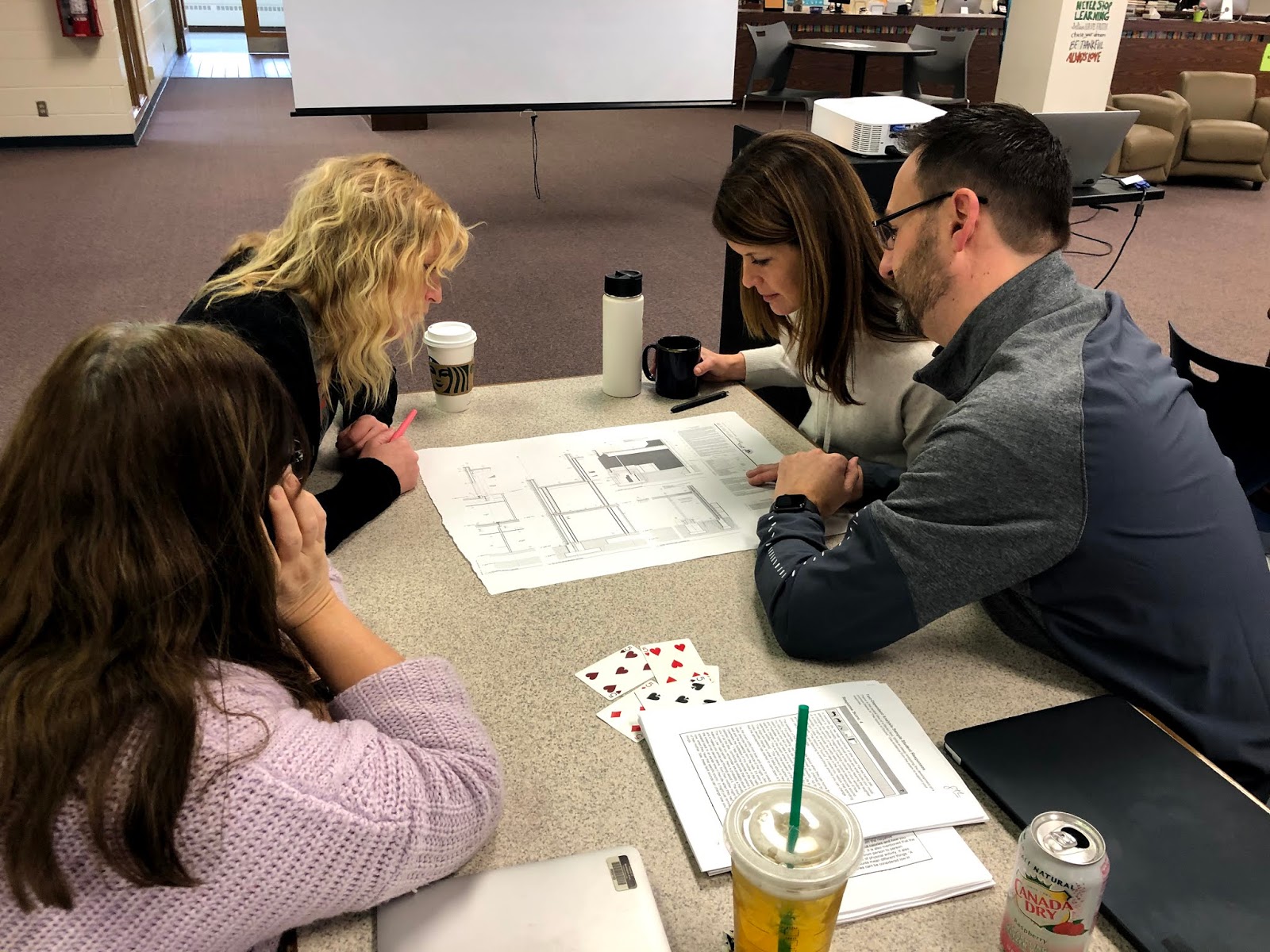
And... a little culture building for our teachers on Friday!  They were asked to take a look at some new building plans and present an "update" as if they work for Scherrer to the rest of the "Scherrer Group" in the room.  They did an amazing job!  They did let the cat out of the bag that the "maintenance penthouse" is not really for maintenance but is a spa area for staff... shhhh... don't tell the other buildings (as they shared in their presentation).  Keep calling it the "maintenance penthouse!"  

And... thank goodness we still have a "Bradly" toilet in the plans as well for Brad Ferstenou!  I am sure he is pleased to know that!  Truly, you all did a great job having fun and building some culture!