KARCHER STAFF BLOG


2019-2020 Karcher Calendar
Facebook Page: https://www.facebook.com/KarcherMiddleSchool/
BASD Staff Blog: https://basdstaffnews.blogspot.com/


2019-2020 Karcher Calendar
Facebook Page: https://www.facebook.com/KarcherMiddleSchool/
BASD Staff Blog: https://basdstaffnews.blogspot.com/
______________________________________________________________________________
Kudos
_____________________________________________________________________________________________________
- Thank you to Eric Sulik and Jon Nelson for all of your behind the scenes work for our advisory lessons over the course of the first two weeks of school and for a great final Field Day for students! We really lucked out with the weather!!! Thank you also to Molly Ebbers for being the "grill master" for all of our staff and students! You better watch out because now we will be asking all the time :)))
- Thank you to Ramon Alvarez and Bobbi Smith for taking on extra hours this week when we were short handed! Your flexibility and willingness is appreciated!
- Thank you to Jon Nelson, Kurt Rummler, Mike Jones, and Stacy Stoughton for helping work the BHS football game this past Friday night! It is great to see the Karcher support there!
Article for the week:
On Formative Assessment
Feed Up, Back, Forward
Teacher response is only one part of an effective feedback system. We must also set clear learning goals and let data influence instruction.
Like the sailors in Samuel Coleridge's poem "The Rime of the Ancient Mariner" who see "water, water everywhere, nor any drop to drink," teachers often feel awash in a resource that is of little help. Teachers have more assessment data about individual students at their fingertips than we could have imagined a decade ago. Unlike saltwater to a thirsty mariner, the data are of course highly usable resources for teachers. Yet many feel unable to "drink" the data around them because they don't have a system for processing it.
We recently saw a teacher collect literacy assessment data on her iPhone and then upload the scores instantly into the school's computer. It was impressive. When we asked how she planned to use this information, however, the teacher replied, "It's just a benchmark test I'm required to give; I don't really use the data." Therein lies the problem: A resource that could significantly enhance teaching and learning is left unused.
The solution is twofold. First, educators have to understand the three components of any powerful feedback system. Second, we have to align the multiple measures we use to create a coherent system of data collection, analysis, and instruction that responds to data in a way that lifts student achievement.
What Makes a Strong Feedback System?
Feedback is a powerful way to affect student achievement (Hattie & Timperley, 2007). Research consistently ranks feedback as among the strongest interventions at teachers' disposal (Kluger & DeNisi, 1996). But feedback is a complex construct with at least three distinct components, which we call feed up, feed back, and feed forward. To fully implement a feedback system, teachers must use all three.
Feedback is a powerful way to affect student achievement (Hattie & Timperley, 2007). Research consistently ranks feedback as among the strongest interventions at teachers' disposal (Kluger & DeNisi, 1996). But feedback is a complex construct with at least three distinct components, which we call feed up, feed back, and feed forward. To fully implement a feedback system, teachers must use all three.
Feed Up: Clarify the Goal
The first component of an effective feedback system involves establishing a clear purpose. When students understand the ultimate goal, they are more likely to focus on the learning tasks at hand. Establishing a purpose is also crucial to a feedback system because when teachers have a clear overall purpose, they can align their various assessments. For example, when it's clear that the purpose of a unit is to compare insects and arthropods, students know what to expect and the teacher can plan readings, collaborative projects, investigations, and assessments to ensure that students focus on content related to this goal.
The first component of an effective feedback system involves establishing a clear purpose. When students understand the ultimate goal, they are more likely to focus on the learning tasks at hand. Establishing a purpose is also crucial to a feedback system because when teachers have a clear overall purpose, they can align their various assessments. For example, when it's clear that the purpose of a unit is to compare insects and arthropods, students know what to expect and the teacher can plan readings, collaborative projects, investigations, and assessments to ensure that students focus on content related to this goal.
Feed Back: Respond to Student Work
The individual responses teachers give students about their work are the second component of a good feedback system, and the one that is most commonly recognized. These responses should directly relate to the learning goal. The best feedback provides students with information about their progress—or lack of it—toward that goal and suggests actions they can take to come closer to the expected standard (Brookhart, 2008). Ideally, teachers give feedback as students complete discrete tasks that are part of a larger project so that students can use teachers' suggestions to better master content and improve their performance on the larger project.
For example, in a unit on writing high-quality introductions, a teacher gave students multiple opportunities to introduce topics using such techniques as beginning with a question or startling statistic, leading off with an anecdote, and so on. The teacher provided students feedback on each introduction they wrote so students could revise that introduction and use the suggestions to improve their next attempt. Rather than simply noting mechanical errors, the teacher acknowledged areas of success and highlighted things students might focus on sharpening.
Feed Forward: Modify Instruction
This formative aspect of a feedback system is often left out. In an effective feedback system, teachers use assessment data to plan future instruction; hence the term feed forward. As teachers look at student work, whether from a checking-for-understanding task or a common formative assessment, they use what they learn to modify their teaching. This demands greater flexibility in lesson planning because it means that teachers can't simply implement a set series of lessons.
For example, student groups in one 3rd grade class we observed each completed a collaborative poster in response to a word problem. Students had to answer the questions in each problem using words, numbers, and pictures. A typical problem read, "Six students are sitting at each table in the lunchroom. There are 23 tables. How many students are in the lunchroom?" Nearly every group got the wrong answer to its problem. Given this information, the teacher knew she needed to provide more modeling to the entire class on how to solve word problems.
Another teacher noted that six of his students regularly capitalized random words in sentences. Mauricio, for example, incorrectly capitalized fun, very, and challenge. Considering that the other students were not making this error, the teacher knew that a whole-class intervention was unnecessary. Instead, he provided additional instruction for the six students who consistently capitalized at random.
This article will continue next week...
______________________________________________________________________________
This formative aspect of a feedback system is often left out. In an effective feedback system, teachers use assessment data to plan future instruction; hence the term feed forward. As teachers look at student work, whether from a checking-for-understanding task or a common formative assessment, they use what they learn to modify their teaching. This demands greater flexibility in lesson planning because it means that teachers can't simply implement a set series of lessons.
For example, student groups in one 3rd grade class we observed each completed a collaborative poster in response to a word problem. Students had to answer the questions in each problem using words, numbers, and pictures. A typical problem read, "Six students are sitting at each table in the lunchroom. There are 23 tables. How many students are in the lunchroom?" Nearly every group got the wrong answer to its problem. Given this information, the teacher knew she needed to provide more modeling to the entire class on how to solve word problems.
Another teacher noted that six of his students regularly capitalized random words in sentences. Mauricio, for example, incorrectly capitalized fun, very, and challenge. Considering that the other students were not making this error, the teacher knew that a whole-class intervention was unnecessary. Instead, he provided additional instruction for the six students who consistently capitalized at random.
This article will continue next week...
Information/Reminders
__________________________________________________________________________________________________________________________
New building information/district facility needs:
- High School gymnastics is in need of a different locker room.
- The old locker room where they used to be cannot be used moving forward. Eric Plitzuweit, Dan Bocock, and myself walked some spaces to determine what would work best and came up with the "storage" locker room across from the concession stand in the vestibule area. Currently it is being used for PE storage, school storage, random storage of different items...
- So... in order for the space to work for the high school gymnastics team everything in that space needs to be housed else where!
- Our PE department will be moving their items out of main space and will still have access to the caged area.
- If there are items in there for clubs or youth sports that you might be aware of please inform groups that all items need to be stored in a different location.
- All items need to be moved by October 15! If you have any questions let me know!
- Press Box:
- Eric Plitzuweit will be working on removing all items from the press box as Scherrer will be demoing the press box sooner rather than later. If you have any items in the press box for a team or club please relocate it asap!
- Shed by the tennis courts:
- All contents inside the shed need to be removed as the shed also needs to go for the new building to come onboard.
- The track and field mats that are used will be housed at the high school until track season starts. We will then determine a location to store them at that time.
- Eric Plitzuweit and Dan Bocock will be organizing the removal of all other items in the shed. If there are items you believe belong in a certain location please let me know.
This week:
- Monday, September 16 -
- Leadership Students Field Trip to Camp MacLean.
- Questions please see Brad Ferstenou or Stephanie Rummler
- Start of iReady testing within our ELA classrooms. ELA teachers can use any three days during the week to test so please be mindful of your classroom noise levels and hallways noise during testing weeks.
- BLT Meeting in the large conference room from 2:40 - 3:30.
- Please share any questions/concerns with a BLT member and we will discuss at BLT.
- Tuesday, September 17
- Start of first iTime rotation
- Student locations has been added to the first page of the Karcher Calendar (middle column)
- 8th grade Washington DC meeting in the library @ 7:00pm
- Thursday, September 19
- Start of Bowling Club!
- Friday, September 20
- Boys Choir Field Trip
- Monday, September 23
- Start of iReady math testing week.
- District Essential Skills Committee Meeting @ 3:45-5:15 in our Karcher library.
- Tuesday, September 24 - Special Education Department Meeting in the small conference room from 2:40-3:15. Please let Alyssa Riggs know if there are any agenda items you would like to discuss.
- Wednesday, September 25
- PLC focus: Essential Skills and/or Strategy and Skill groups.
- Friday, September 27
- Danish Invasion in our 8th grade advisories!!!
- 7th grade BASD School Forest Field Trip.
- Any questions... ask Barb Berezowitz or Andrea Hancock
Looking ahead:
______________________________________________________________________________
Pictures from the week
____________________________________
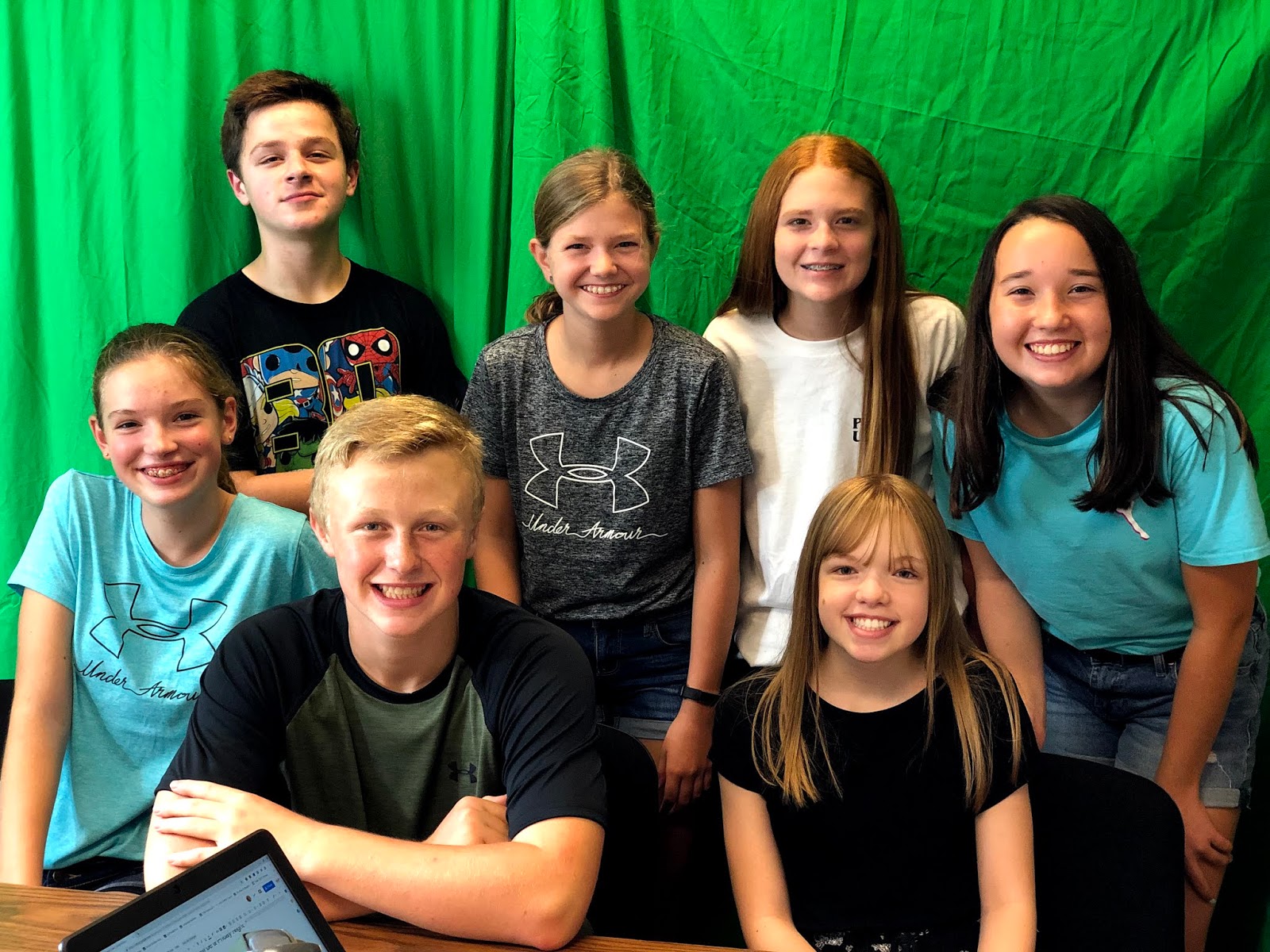
Students working through stations with Patti Tenhagen!